Unified Autonomy Stack
An autonomy stack for diverse robot platforms in GPS-denied environments. Report | Documentation | GitHub We introduce and open-source the 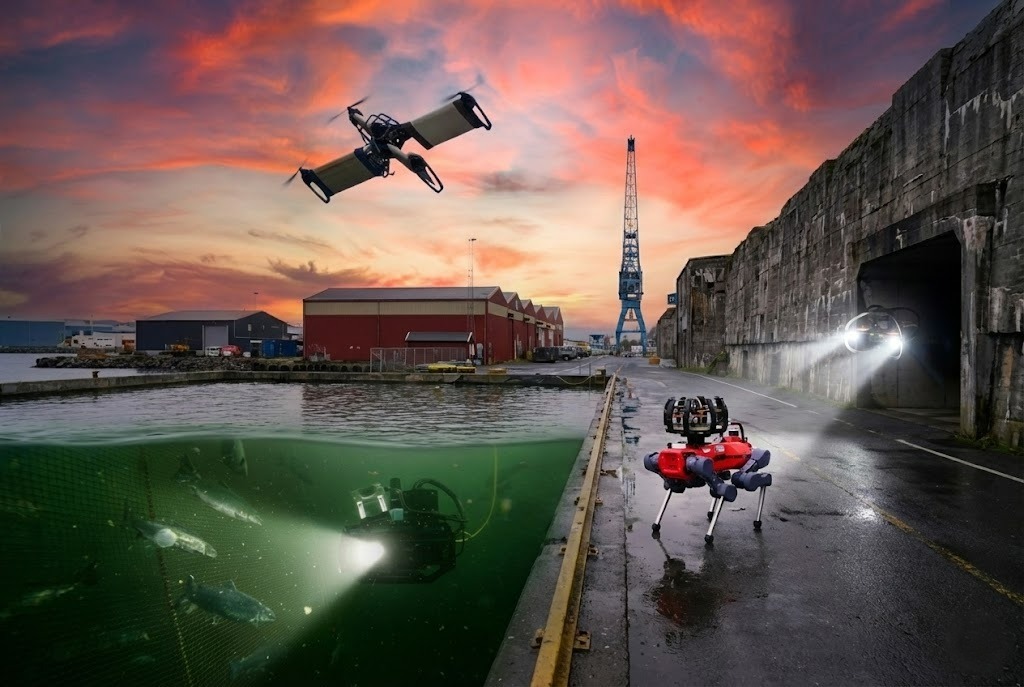
Abstract
Unified Autonomy Stack, a system-level solution that enables robust autonomy across a wide range of aerial and ground robot morphologies. The architecture centers on three broadly applicable modules -multi-modal perception, multi-stage planning, and multi-layered safety mechanisms- that together deliver end-to-end mission autonomy. The resulting behaviors include safe navigation into unknown regions, exploration of complex environments, efficient inspection planning, and object-level scene reasoning. The stack has been validated on multiple multirotor platforms and legged robots operating in GPS-denied and perceptually degraded environments (e.g., self-similar, textureless, smoke/dust-filled settings), demonstrating resilient performance in demanding conditions. It currently supports two major embodiment families, namely rotorcraft and certain ground systems such as legged and differential-drive platforms, while several of its modules have already been validated on additional robot types, including fixed-wing aircraft for GPS-denied flight and underwater exploration planning. To facilitate ease of adoption and extension, we additionally release a reference hardware design that integrates a full multi-modal sensing suite, time-synchronization electronics, and high-performance compute capable of running the entire stack while leaving headroom for further development. Strategically, we aim to expand the Unified Autonomy Stack to cover most robot configurations across air, land, and sea.